AGENDA
Preventing Child Sexual Violence through Assessment, Treatment and Safe Management
April 8 & 9, 2026 | Virtual Event
Day 1: Wednesday, April 8
All times are in Eastern.
8:30 – 9:00
REGISTRATION
9:00 – 9:15
WELCOME
9:15 – 10:15
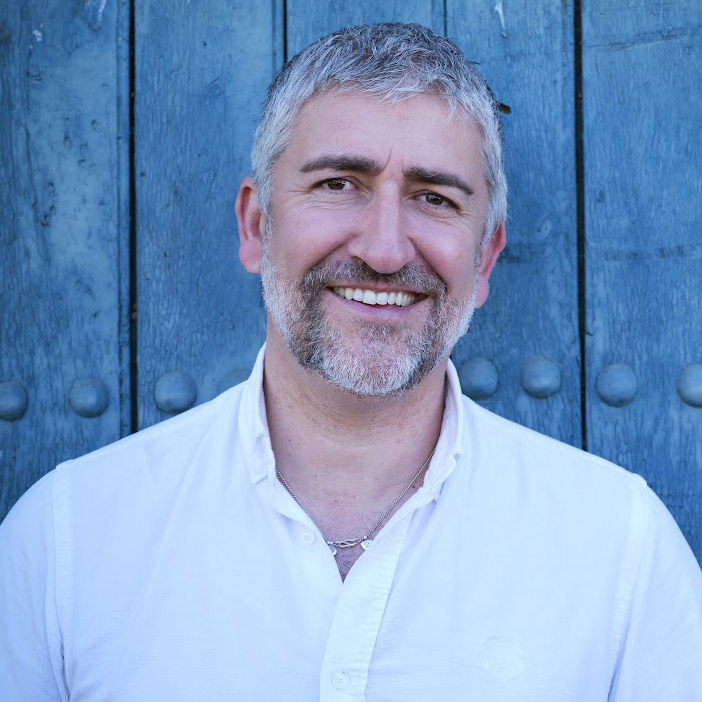
MASOC KEYNOTE
Do Not Bypass the Center: The Labyrinth Path of Healing
Manni Coe
Manni Coe is an author, traveler, guide, and brother. His most recent book, Little Ruins, was born from a simple but profound truth offered by a friend: “We all have a little ruin inside us.” This keynote gently explores those ruins — not to sensationalise trauma, but to illuminate how healing can unfold with patience, courage, and care.
Drawing on philosophy, lived experience, and therapeutic insight, Manni reframes suffering not as a badge of honour, but as a space where transformation becomes possible. Using the labyrinth as a metaphor, he explores why healing requires us not to avoid pain, but to trust the process and find the courage to return to what we have fled. He explores forgiveness honestly and rigorously: not as a denial of justice, but as a mindset that frees the injured without absolving wrongdoing. Manni offers an invitation: to slow down, to remove fear, to create systems which fund and value effective therapy, and to remember that healing, forgiveness, and justice cannot be rushed, but they are possible.
Manni Coe grew up in Yorkshire and Berkshire, England is the second of four brothers. He studied Latin American History & Culture at Edinburgh University which took him on adventures to South America before he finally settled in Spain. He now lives between Andalusia, Spain and Dorset, England. He works as a private tour guide in both Spain and around the world. He is the author of the Sunday Times bestselling memoir “brother. do. you. love. me.” and the recently published “Little Ruins.”
10:15 – 10:30
BREAK
10:30 – 12:00
WORKSHOPS | Session 1
MASOC
1A. Bridging the Age Gap: Examining the Emerging Adult Population through a Trauma-Informed Lens
Candice Waltrip, PsyD and Michele Leslie, PsyD
MATSA
1B. Pedophilia and CSEM Offenses: Etiological and Typological Considerations
Sonja Krstic, PhD
individuals convicted of CSEM offenses.
12:00 – 12:30
Presenting the Work of the MASOC Pathways to the Profession Fellows
Claire Luebke, MSW; Swathi Sunil; and Alex M. Ray
12:30 – 2:00
WORKSHOPS | Session 2
2A. Supporting and Guiding Parents and Caregivers of Children with Sexual Behavior Problems
Jacqueline Page, PsyD
This session is designed to help professionals in supporting and guiding caregivers of children with sexual behavior problems. It is relevant for therapists as well as other professionals involved with caregivers. The session looks at caregivers varying responses and provides strategies for engaging and supporting them. Family-centered approaches applicable across a variety of professional interactions with caregivers are presented. While common areas of treatment are highlighted, the focus is on examining psychoeducational content to increase caregiver’s understanding of child sexual development and helping the caregiver increase their comfort and knowledge related to age-appropriate sex education as well as responds to sexualized behavior. Specific attention will also be given to understanding safety planning is more than just rules and exploring balancing safety with the child being able to be a child.
MATSA
2B. BDSM 101 and Kink-Affirming Assessment
Stefani Goerlich, PhD, LICSW, CST
This workshop begins with a comprehensive 101-level overview of the BDSM community, its practices, nuances, and mental health needs. From there, we will explore how to conduct a kink-affirming risk assessment, including diagnostic criteria and exclusions, the impact of anti-kink bias on clinical assessments, and when and how to diagnose a paraphilic disorder. Attendees will gain a working knowledge of how to provide affirming and inclusive mental health care to BDSM practitioners. This talk contains content that is not graphic, but which some folks may find uncomfortable.
2:00 – 2:15
BREAK
2:15 – 3:45
WORKSHOPS | Session 3
MASOC
3A. Beyond Reoffending: Developmental Pathways and Life Course Outcomes for Children and Young People with Harmful Sexual Behavior
Simon Hackett, PhD
Drawing on his study of children and youth with HSB, Simon’s presentation will explore developmental pathways into and out of HSB, including the roles of adversity, relationships, family systems, and social contexts, and will examine what is known about longer-term outcomes for children and young people into adulthood. Attention will be given to how assessment and intervention approaches can support healthy development, strengthen protective factors, while still addressing harm and promoting safety.
MATSA
3B. Harassment, Coercion, and the Agonistic Continuum: Structure, Covariation, and the Consequences for Assessment
Ray Knight, PhD and Judith Sims-Knight, PhD
Sexual harassment, sexual coercion, and the more severe forms of sexual aggression that the Agonistic Continuum captures have often been conceptualized as categories that are distinct. In this symposium we will summarize the empirical data that examine the structure and intercorrelations among sexual harassment, coercion, and the more violent forms of sexual aggression. We will describe the current empirical evidence, which supports the hypotheses that these three are not distributed as categories but are rather intercorrelated dimensions with substantial shared variance and that those who exhibit these sorts of behaviors share critical developmental antecedents. The understanding of how these aspects are structured, their empirical interrelation, and their common antecedents has consequences not only for how they should be assessed and treated, but also for how to improve public policy decisions about sexual aggression.
3:45 – 4:00
BREAK
4:00 – 5:30
WORKSHOPS | Session 4
MASOC
4A. Toward Justice: Integrating Survivor Needs and Perspectives on Diversion, Treatment, and Restorative Practices in Youth Sexual Harm Response
Hema Sarang-Siemenski, JD, HeidiSue LeBoeuf, LCSW, and Kiah Murphy, Esq.
Participants will explore how survivor-informed models can align accountability with repair, skill-building, and behavioral change with the goal of producing better outcomes for survivors, youth, and communities alike. Together, we will consider what it means to pursue justice that is both survivor-centered and future-oriented, and how systems can responsibly integrate diversion, treatment, and survivor-defined measures of success.
MATSA
4B. Evidence-Informed Practices for Individuals Convicted of CSEM Offenses
Katherine Gotch, LPC, CCSOT, ATSA-F
5:30 – 5:45
CLOSING REMARKS
REFUND AND CANCELLATION POLICY: Refunds will not be given unless the conference is canceled. If you are unable to attend for any reason, you may designate a replacement. Please notify the conference coordinator as soon as possible of any changes via email at registration@masoc.net, or by phone at 413-344-0367.
Day 2: Thursday, April 9
All times are in Eastern.
9:00 – 9:15
WELCOME
9:15 – 10:15

MATSA KEYNOTE
The Myth of Interchangeable Evaluators in Forensic Assessment
Marcus T. Boccaccini, PhD
Marcus T. Boccaccini is a Distinguished and Regents’ Professor in the Department of Psychology and Philosophy at Sam Houston State University, where he has worked for the past 23 years as a core faculty member in the Department’s Clinical-Forensic Psychology PhD Program. His research focuses on applied issues in forensic assessment, with an emphasis on evaluator agreement and decision-making.
10:15 – 10:30
BREAK
10:30 – 12:00
WORKSHOPS | Session 5
MASOC
5A. Strengths-Based, Resilience-Enhancing Services: Key Components for Treating Youth Impacted by Adverse Childhood Experiences
Kevin Powell, PhD
There is growing awareness and empirical support for targeting strengths and resilience when providing services to youth and families who have been impacted by adverse childhood experiences (ACEs). This training will highlight key strengths-based, resilience-enhancing (SBRE) components to incorporate into ACE-informed treatment services. The SBRE framework includes twenty treatment components that are organized into six main categories, 1) Relationship Development, 2) Stabilization, 3) Engagement, 4) Assessment, 5) Intervention, 6) Prevention. SBRE services assist youth in adaptively coping with life adversity and acquiring the knowledge, skills, and strengths for leading psychologically healthy, resilient lives.
MATSA
5B. Breathless Ecstasy: Erotic Asphyxiation and Asphyxiophilia
Stephen Hucker, MB BS, FRCP(C), FRCPsych
12:00 – 12:30
BREAK FOR LUNCH
12:30 – 2:00
WORKSHOPS | Session 6
MASOC
6A. Foundations, Frameworks, and Futures: Moving Toward a World Free of Sexual Harm By Youth
Kevin Creeden, MA, LMHC; Erica Ogletree, PhD, LPCC-S; Joan Tabachnick, MBA; David Prescott, LICSW; Ryan Shields, PhD, moderated by Meg Bossong, MS
MATSA
6B. Panel: Clinical and Forensic Considerations Regarding Sexually Violent Predator/Sexually Dangerous Persons and Civil Commitment
Sharon Kelley, Psy.D., Robin Wilson, Ph.D., & Katrina Colistra, Psy.D., moderated by Kaitlyn Peretti, Psy.D. & Crystal Cookman, Psy.D.
2:00 – 2:15
BREAK
2:15 – 3:45
WORKSHOPS | Session 7
MASOC
7A. Empowerment through Understanding: A Needs and Vulnerabilities Approach to Working with Challenging Behaviors
Anette Birgersson, LP and Christin Santiago, MPA, CTRS
MATSA
7B. Kinky Defenses: Legal Implications of the Paraphilias
Renée Sorrentino, MD, DFAPA and Ryan Hall, MD, DFAPA
This session will focus on how the paraphilias are understood within civil and criminal law, including their role in cases of criminal responsibility, diminished capacity, mitigation, civil commitment, fitness for duty and disability. The scientific challenges, as well as the inherent biases, in these diagnoses will be reviewed through the lens of the legal system.
3:45 – 4:00
BREAK
4:00 – 5:30
WORKSHOPS | Session 8
MASOC
8A. “I Could Never Do That Job”: Learning How to Respond to Occupational Stigma as a Skill of Career Sustainability
Johnanna Ganz, PhD
MATSA
8B. Attitudes Toward Sexual Offending and Public Policy: Disentangling Offender Characteristics and Respondent Traits
Emily Calobrisi, MA
5:30 – 5:45
CLOSING REMARKS
REFUND AND CANCELLATION POLICY: Refunds will not be given unless the conference is canceled. If you are unable to attend for any reason, you may designate a replacement. Please notify the conference coordinator as soon as possible of any changes via email at registration@masoc.net, or by phone at 413-344-0367.
Thank you to our sponsors